

A guide to quantity restrictions 🍎

Want to learn more about IBS and your gut?
Find safe products that won't upset your stomach, and get a full overview of the low FODMAP diet with content quality assured by clinical dietitians. Join more than 150,000 others and download the app today!

About FODMAPs and limit values
FODMAPs is a collective term for various types of carbohydrates and sugar alcohols. In the large intestine, FODMAPs are fermented by bacteria, while water is drawn into the intestine. This can lead to painful stretching of the intestinal wall, gas, and changes in stool consistency. These are some of the mechanisms behind FODMAP-related symptoms in IBS.
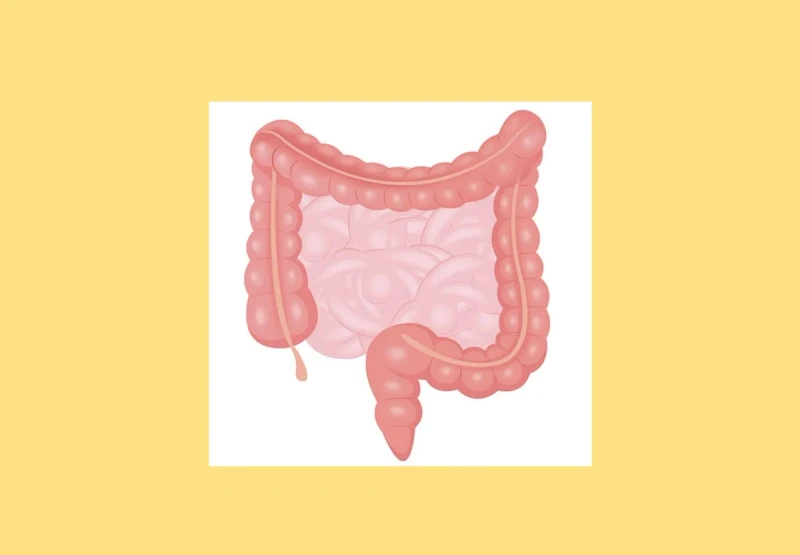
How much FODMAP a person can tolerate before symptoms appear is highly individual. However, researchers have established cutoff values that represent the amount of each type of FODMAP that most people with IBS can consume without symptoms (1). These cutoff values vary between different FODMAP types. For example, most people tolerate up to 0.2 g of fructans, while lactose has a cutoff value of 1 g (1).
Cutoff values in practice
Because we eat whole foods, not isolated FODMAPs, we need to consider both which types of FODMAPs a food contains and how much of each type it contains. The portion size also matters.
These factors are included when calculating how much of a food counts as low FODMAP. This portion limit tells us how much we can eat without exceeding the cutoff values for the different FODMAP types. In other words: the amount that qualifies as low FODMAP. This is sometimes called a “green serving”.

Image: The various icons used in Noba for respectively low, moderate and high FODMAP
Example: lactose in milk
A regular glass of cow’s milk is about 200 ml and contains about 9 g of lactose (2, 3). This is far above the 1-gram cutoff. Normal cow’s milk is therefore high FODMAP at usual serving sizes. But what about smaller amounts?

Based on a calculation, we can calculate that 20 grams of milk (approx. 4 teaspoons) contains less than 1 gram of lactose. Therefore, the quantity limit for milk is 4 teaspoons, meaning that this amount of milk is low FODMAP.
In practice, this means that although a whole glass of milk may trigger symptoms, you can usually safely eat a dish containing just a splash of milk. Lactose-free or lactose-reduced milk can of course be consumed in larger amounts.
It is the amounts that matters!
Like cow's milk, several foods are considered high FODMAP in normal portion sizes, but can still be eaten in small amounts - for example red bell pepper, tomato, apple and wheat pasta. Other foods are low FODMAP in normal portion sizes, but become moderate or high FODMAP in larger amounts, such as sweet potato, kiwi, and cabbage.
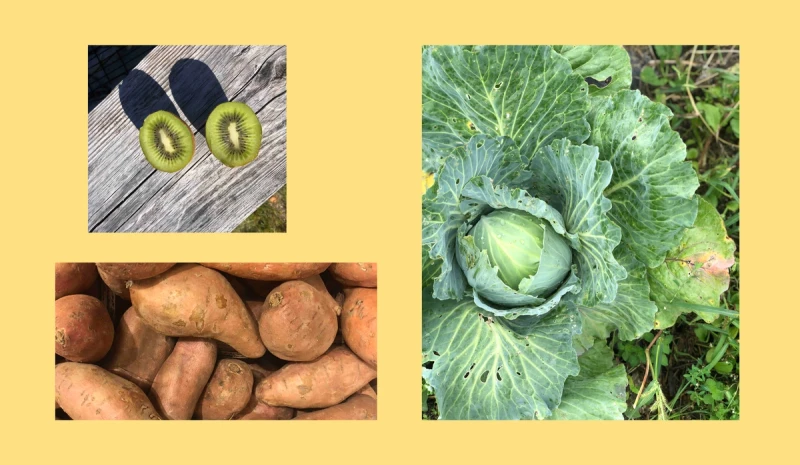
Image: Foods that are assessed as low FODMAP at normal portion sizes, but which have a quantity limit
Some foods contain virtually no FODMAPs and can be eaten freely.
In the NOBA app, the total rating is displayed as a red, yellow or green symbol. For those foods that have a quantity limit, you will find it when you go to each individual product.
From quantity restriction to meals
It’s easy to think about one food at a time - but what about meals with several foods containing FODMAPs?
Monash University sets portion limits so that you can combine several “green servings” in the same meal (7). This means you do not need to calculate FODMAP content in each meal, as long as you stick to low amounts and let most of the meal consist of foods with very low or no FODMAPs.
When starting the FODMAP diet, keep things simple: let most of your meal be foods with little or no FODMAPs - such as meat, eggs, rice, potatoes, and carrots. Then you can safely add “green portions" of other foods.
Examples of foods with little or no FODMAPs include: eggs, meat, fish, potatoes, carrots, rice, lactose-free dairy products, arugula, parsnip, blueberries, etc. Note that composite foods may contain high-FODMAP ingredients - check the app to be sure.
Tips to avoid eating too many FODMAPs:
- Leave 2-4 hours between meals. This allows your gut time to process food before the next meal, preventing FODMAPs from “building up.”
- Avoid large meals. Bigger portions increase the risk of consuming too many FODMAPs. Aim for 3-5 smaller meals.
- Remember that snacks and drinks count. Drinks like soda, juice, and milk, as well as snacks, may contain FODMAPs.
- Be extra careful with foods that commonly cause trouble, such as fruits (which are often high in FODMAPs), beans, lentils, onion and garlic.
Examples:
- You can safely eat 75 g sweet potato and 75 g cauliflower in the same meal, even though they contain the same type of FODMAP.
- After 2-3 hours, most people can eat them again without any issues (7).
If you´re not improving on the FODMAP diet
Some people are very sensitive to FODMAPs and may still experience symptoms even when sticking to green servings and following all the tips above. In that case, it can be helpful to review what you eat and consider adjusting portion sizes of FODMAP-containing foods (7).
Remember, the goal is always to include as many foods as possible in your diet once you’ve completed phases 1-3.
Not all symptoms are caused by FODMAPs
Many people experience symptoms right after a meal. This is likely related to other IBS mechanisms, and not the foods just eaten (6). FODMAP-related symptoms mainly occur when food reaches the large intestine - typically around 4 hours after eating (6).
More useful articles can be found here:
- General advice for irritable bowel syndrome
- Based on research
- Explanation of symbols
- Phase 1: Elimination
References:
1. Varney J, Barrett J, Scarlata K, Catsos P, Gibson PR, Muir JG. FODMAPs: food composition, defining cutoff values and international application. Journal of Gastroenterology and Hepatology. 2017;32:53-61.
2. Hvor mye laktose er det i meieriproduktene? : Opplysningskontoret for Meieriprodukter; [updated September 2019. Available from: https://www.melk.no/Kosthold-og-helse/Taaler-ikke-melk/Hvor-mye-laktose-er-det-i-meieriproduktene.
3. Dalane JØ, Bergvatn TAM, Kielland E, Carlsen MH. Mål, vekt og porsjonsstørrelser for matvarer = Weights, measures and portion sizes for foods. Oslo: Mattilsynet Universitetet i Oslo Helsedirektoratet; 2015.
4. Erin Dwyer LM, Jane Varney. FODMAP Blog [Internet]: Monash University. 2019. Available from: https://www.monashfodmap.com/blog/how-avoid-fodmap-stacking/.
5. Barrett J. FODMAP Blog [Internet]: Monash University. 2016. Available from: https://www.monashfodmap.com/blog/timing-of-symptoms/.
6. McNamara L. FODMAP Blog [Internet]: Monash University. 2018. Available from: https://www.monashfodmap.com/blog/eating-and-ibs-symptoms/.
7. Dwyer E. FODMAP Blog [Internet]: Monash University. 2019. Available from: https://www.monashfodmap.com/blog/how-avoid-fodmap-stacking/